Research Interests in Control Systems Theory and Applications
-
Control of Distributed Parameter Systems (DPS)
-
Event-triggered and Sampled-data Control
-
Predictor Feedback Design for Time-delay Systems
-
Extremum Seeking Control
-
Safe Control via Control Barrier Functions
-
Adaptive and Learning Control


Inaugural African Control Systems Symposium (AFCONS)
July 14-16 at the African Institute for Mathematical Sciences (AIMS), Mbour, Senegal
Set against the backdrop of Senegal's vibrant coastal region of Mbour, the inaugural African Control Systems Symposium (AFCONS) brings together leading researchers, students, industry innovators, and policymakers from across Africa and the world. AFCONS is dedicated to advancing control science and engineering, fostering technological innovation, and creating enduring partnerships that will contribute to Africa's scientific and technological transformation for generations to come.


Chair
Diaraf Seck
Laboratory of Mathematics
of Decision and Numerical Analysis,
University Cheikh Anta Diop, Dakar, Senegal
Website
email: diaraf.seck@ucad.edu.sn
Vice-Chair
Daouda Niang Diatta
Laboratory of Mathematics
and its Applicatons, University Assane Seck of Ziguinchor,
Senegal
Website
email: dndiatta@univ-zig.sn

Local arrangements
and Finance Chair
Coura Baldé
African Institute for
Mathematical Sciences (AIMS)
Senegal
Website
email: coura.balde@aims-senegal.org

Program Chair
Mamadou Diagne
Department of Mechanical and Aerospace Engineering, University of California San Diego, USA
Website
email: mdiagne@ucsd.edu
Plenary Speakers

Robert Bitmead
University of California San Diego, USA
The Logic of Control Practice and its Messages
Developing feedback controllers for systems operating in practical environments, such as industry, always seems to involve tuning, tweaking or multiple redesigns. And the more high-performance the application, the more commissioning effort is required. When tools such as optimal control are used, the optimized criterion function typically is the mechanism of design. It is adjusted until performance is deemed acceptable and it rarely measures the actual quantification of the control objective. This is especially evident with Model Predictive Control. Yet such an approach conflicts with how we teach and promote control theory as moving surefootedly from plant model to controller. Part of the issue in practice is that models adequate for control design are difficult to obtain and to characterize their modeling accuracy. Tuning uses new closed-loop experiments and experimental data to adjust the controller. In this talk, we shall explore the deductive logic behind control theory, the inductive logic of using data and the role played by the controller designer and their knowledge of the target system itself to generate the tuning experiments. The objective of the talk is to caution against assuming direct data-driven methods offer a simple way forward without the intricate expertise of the control engineer and process expert. Good news for job security.
Bibiography: Bob Bitmead is Distinguished Professor Emeritus in Mechanical & Aerospace Engineering at the University of California, San Diego. He holds degrees in Applied Mathematics and Electrical Engineering from Sydney University and Newcastle University, both in Australia. He has held faculty positions at the Australian National University and James Cook University of North Queensland. He is a control theorist with a long experience in control applications in many industrial sectors. His theoretical work is strongly informed and guided by these applications. He received the 2014 ASME Rufus Oldenburger Medal and the 2015 IEEE Controls Systems Transition to Practice Award. Bob was President of the IEEE Control Systems Society in 2019. He is Fellow of IEEE, IFAC and the Australian Academy of Technological Sciences and Engineering.

Mamadou Mboup
University of Reims Champagne Ardenne
Stability and Stabilization of nD Linear Systems: Amœbas-- the Polydisc Nullstellensatz
This presentation will address two essential questions in the control of nD (multidimensional, n > 1) linear systems: stability and stabilization. All existing algorithms for testing the BIBO (Bounded Input, Bounded Output) stability of nD linear systems suffer from the curse of dimensionality, limiting their effectiveness to cases where n does not exceed 2. These limitations likely stem from the stability criteria on which these algorithms are based. In the first part of this presentation, we will introduce a new stability criterion based on the geometry of the amœba of the denominator of the system’s rational transfer function. The amœba of a polynomial is the image of its zero set under the logarithmic modulus map. This leads to a stability test algorithm that, thanks to Monte Carlo integration, remains efficient for any value of n. Some examples will be discussed. In the second part, we discuss the effective computation of stabilizing controllers for multidimensional systems. Recent works have shown that the nD stabilization problem can be framed in terms of the polydisc nullstellensatz. Ad-hoc solutions can be devised in the 2D case or for some specific situations. However, a general methodology to solve this problem is still lacking. The objective of this second part is to propose one, by relating the polydisc nullstellensatz problem to a weighted Cauchy-Pompeiu formula. Some open questions will be discussed.
Bibliography: Mamadou Mboup received the Doctorat en Sciences from University Paris-Sud, Orsay, France, in 1992 and the Habilitation à Diriger des Recherches-HDR, from University Paris Descartes Paris 5 in 2003. From 1993 to 2009, he served as Associate Professor in the Department of Mathematics and Computer Science at University Paris Descartes-Paris 5. Currently, he is Full Professor at the University of Reims Champagne Ardenne, with the Department of Electronics, Electrotechnics and Automatic Control, that he joined since 2009. Since 2014, he has been on secondment with the French National Research Agency (ANR :Agence Nationale de la Recherche), where he currently holds the position of Deputy Head of the Numerical and Mathematics Department, since 2018. His research is interdisciplinary and explores the intersection of mathematical systems theory, signal processing and control theory, through the lens of complex analysis. He had been elected (feb-july 2010) as a guest professor within the InnoLecture (Innovative Lecture) program of University of Saarland, Germany.Mamadou Mboup acts as Editor-In-Chief for The African Diaspora Journal of Mathematics (2014-2019, Project Euclid) and as Associate Editor for Complex Analysis and Operator Theory (Birkhauser-Verlag) since 2014, and for EURASIP Journal on Advances in Signal Processing(2012-2023, Elsevier). He is co-editing the section Linear systems of the Handbook in Operator Theory, Springer (2015, 2026). He was General Chair of the international IEEE- Machine Learning for Signal Processing (MLSP14) conference, held in Reims in 2014.

Aissa Wade
Pennsylvania State University
USA
From Poisson Geometry to Control Theory
Poisson geometry provides a natural and unifying framework for the analysis and control of nonlinear dynamical systems arising in mechanics, robotics, and networked physical systems. By extending symplectic geometry to include degenerate structures, Poisson manifolds capture constraints, symmetries, and reduced phase spaces that frequently occur in controlled mechanical models. Casimir functions on a Poisson manifold impose fundamental limits on controllability by restricting dynamics to symplectic leaves, thereby revealing intrinsic structural obstructions. These insights underpin energy-based and passivity-based control methodologies, including the port-Hamiltonian framework.
In this talk, we will survey some results from Poisson geometry and their application to control theory, including port-Hamiltonian systems. In addition, we will discuss some extensions to contact geometry and Jacobi geometry that further accommodate dissipation and open system dynamics.
Bibliography: Aissa Wade is Professor in the Mathematics Department at Penn State, University Park. Wade received a Ph.D. in Mathematics from Montpellier University 2, France. Wade’s research lies at the intersection of Poisson and Jacobi geometry, and mathematical physics with applications to various areas such as geometric mechanics, control theory, etc. Wade has published in top peer‑reviewed journals and has presented her work at several international conferences in pure and applied mathematics. Her current research explores Poisson and Jacobi structures and their applications to physical systems.
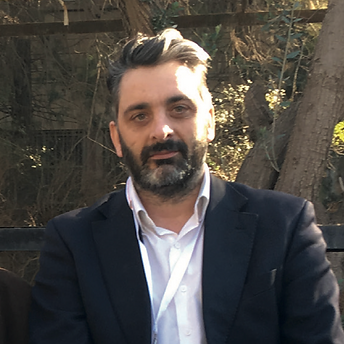
Stabilization of Nonlinear Systems with Discontinuous Feedbacks
This talk addresses the problem of stabilizing nonlinear control systems using discontinuous feedback laws. Classical continuous stabilizers often fail due to topological obstructions, as highlighted by Brockett’s necessary condition. We now address how discontinuous feedbacks overcome these limitations, relying on tools from nonsmooth analysis and on the notion of locally semiconcave control Lyapunov functions. We then explain how stabilizing feedbacks can be constructed from such Lyapunov functions and present key results on asymptotic and robust stabilization, with a particular emphasis on sub-Riemannian and geometric control settings.
Ludovic Rifford
University Côte d'Azur Nice and CNRS
Bibliography: Ludovic Rifford is a French mathematician and professor at Université Côte d’Azur in Nice, affiliated with the Jean-Alexandre Dieudonné Laboratory. His research lies at the interface of analysis, geometry, and dynamical systems, with a particular focus on sub-Riemannian geometry and geometric control theory. He has made significant contributions to major problems such as Sard’s conjecture in sub-Riemannian geometry and questions related to Hamiltonian dynamics. He has also been actively involved in international mathematical cooperation, notably as Executive Director of CIMPA, and currently serves as Secretary for Policy of the Commission for Developing Countries of the International Mathematical Union.

AFCONS is held at Mbour Km, 1418, 2 Rte Mbour -Joal, M'bour, Senegal
Registration is open to all participants wishing to attend AFCONS, either partially or for the full symposium. Travel support is available on a competitive basis and will be allocated according to criteria established by a selection committee.
We also warmly welcome participants who are able to self-fund their travel and accommodation, and we look forward to your participation.
There is no registration fee.
Registration deadline: June 25, 2026, 05:00 PM, GMT!
U.S. Student Participants
Applications are invited from outstanding graduate and undergraduate students enrolled at U.S. institutions who are conducting research in control systems, robotics, automation, optimization, and related fields.
Application materials
-
Curriculum Vitae (CV)
-
Letter of support from the student's advisor or department
Selection process
Applications will be evaluated by an international review committee composed of AFCONS co-organizers based outside the United States.
Details and submission:
Email: afcons.symposium@gmail.com
Important dates
-
Application deadline: July 2, 2026
-
Notification of selection: July 4, 2026


